When we talk to parents looking for a preschool, the same question comes up every time: “What curriculum do you follow?” And honestly, we get it. You want to make sure your child is in the right place. At Little Scholar, Ghaziabad, the focus stays on one thing: helping children become comfortable with learning. Not rushed. Not forced. Just steady growth in the way kids actually grow.
The word preschool curriculum can sound heavy, like something meant for older children. But in preschool, the curriculum is not a thick book. It is the everyday plan that decides what your child experiences in class.
What a preschool curriculum really means (in daily life)
Let’s make this simple. The preschool curriculum is the behind-the-scenes structure of the day. It’s what decides things like:
What children listen to, what they play with, what they practise, how teachers speak to them, how much outdoor time they get, how often stories happen, whether kids are allowed to explore freely.
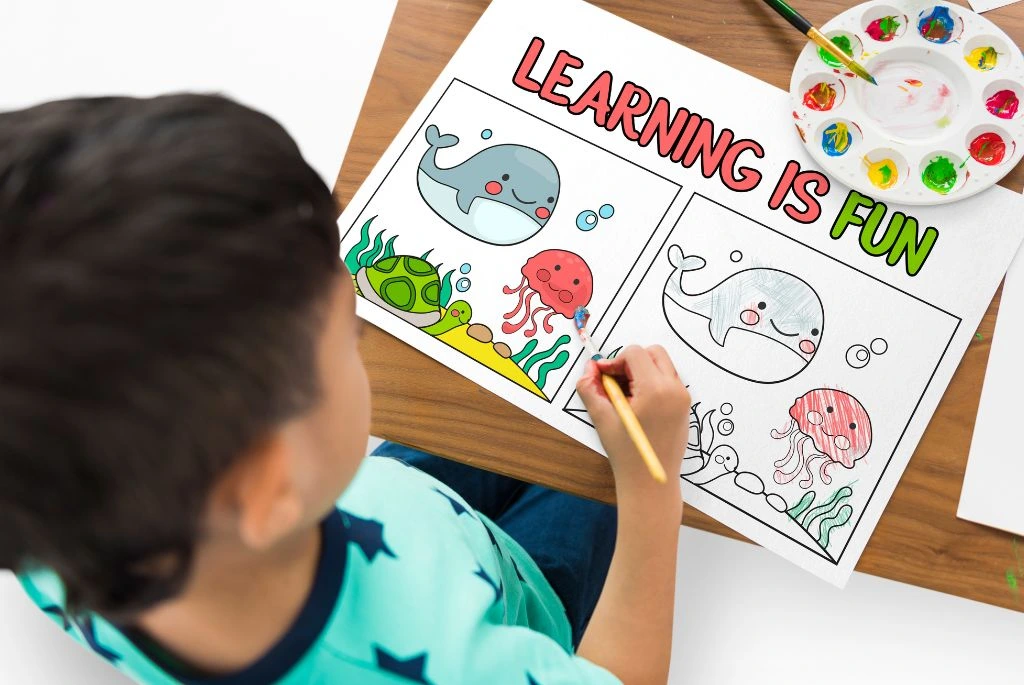
In a good preschool curriculum, learning doesn’t feel like “study time”. It feels like:
- Let’s hear a story
- Try this puzzle
- Can you find the red block?
- Let’s sing together
- Who wants to help clean up?
Those are not just cute moments. That is learning at this age.
What children should learn in preschool (and what can wait)
If your child learns only ABCs and 123s in preschool, that is not enough. It looks good on paper but does not help much in real life.
A strong preschool curriculum builds the base first: confidence, communication, independence, and social behaviour. When that base is strong, academics become easy later.
Here are the big areas your child should grow in:
- Speaking and vocabulary through stories, rhyme, conversation
- Early number sense through counting toys, sorting shapes, patterns
- Social skills like waiting, sharing, teamwork
- Fine motor skills like colouring, clay, tearing, pasting
- Movement through outdoor play, balance, running, jumping
This is the kind of learning that shows up later in school as my child adjusts easily, my child speaks up, and my child is not scared of new tasks.
How parents can judge a school’s curriculum without fancy words
Most schools will tell you their curriculum is the best. But you don’t need impressive terms. You just need to notice a few things.
If you visit the preschool, ask yourself:
- Do children look relaxed or afraid?
- Do teachers talk gently or only give instructions?
- Is there free play or only sitting work?
- Are kids allowed to ask questions?
- Do children look engaged or bored?
A good preschool curriculum should leave children happy, not tired and stressed.
Curriculum for Preschool in India: What It Should Include Today
A lot of parents search curriculum for preschool in India because they want something practical, not foreign or confusing, and they want their child ready for “big school”.
That’s fair. But here is the problem: in India, some preschools push writing and memorising too early. It feels like progress, but for many children it creates fear and dislike for learning.
A sensible curriculum for preschool in India should balance:
- Play based learning (this is how young kids learn best)
- School readiness (so the transition to primary is smooth)
The goal is not to create a child who can write a paragraph at age four. The goal is to create a child who can listen, speak, share, focus, and try.
Also read: What Does Early Childhood Education Mean?
How Little Scholar, Ghaziabad keeps it natural
What parents usually like about Little Scholar is that it does not feel like a pressure cooker. The environment is warm. The teachers stay patient. And the day is planned in a way that makes children want to participate.
A lot of learning happens in normal moments:
- Circle time conversations
- Theme based learning that connects with real life
- Storytelling and rhymes
- Hands on tasks like sorting, building, matching
- Outdoor play every day
- Creative time like art, music, movement
That is the heart of the preschool curriculum here. Kids learn, but they also get to be kids.
Conclusion
If you are choosing a preschool, don’t get stuck on big words. Focus on what your child will become after spending a few months there.
A good preschool curriculum helps children:
- Speak without hesitation
- Sit in a group comfortably
- Follow simple routines
- Interact with other children kindly
- Enjoy learning instead of fearing it
That’s what matters. Everything else comes later.