
Parenting · Summer Vacation · Early Childhood · Ghaziabad
How to Structure Summer Vacations for Kids: Meaningful, Screen-Free Learning Through Family and Traditions
Summer break starts with excitement and often ends with screens. Here is a practical, honest guide for parents who want something better for their children this summer.
Summer vacation starts the same way in most households. A week of genuine happiness, sleeping in, late mornings, cousins over, everyone relieved that school is finally done. And then, somewhere around day ten, a different feeling creeps in. The screens come out. The bickering starts. And parents begin quietly wondering how two months of this is going to go.
It does not have to be that way. Summer is genuinely one of the best gifts you can give a young child, but only if it is used with some thought. Not structured like a school schedule, not filled with tutors and worksheets, but shaped with intention so that the days feel full and the weeks actually mean something when they are over.
This is a guide for parents in Ghaziabad who want exactly that.
Rethinking What Summer Is Actually For
Most of us have been conditioned to think of summer as a recovery period. School was intense, now we rest. And rest is genuinely needed. But there is a difference between rest and simply filling time, and children feel that difference even if they cannot articulate it.
A child who spends summer sleeping, eating, and watching videos is not really resting. They are disconnecting, and by the time school starts again, getting back into any rhythm feels harder than it should. But a child who spends summer playing outdoors, spending time with grandparents, helping in the kitchen, and just being part of family life comes back to school with more energy, more curiosity, and noticeably better social skills.
Summer is not a pause in your child’s development. It is one of the best windows for it, precisely because the pressure is off and the environment is more relaxed and natural than any classroom can be.
The Summer We Grew Up With vs Today
For most of us who grew up in India in the eighties and nineties, summer meant going to Nani ka ghar. No alarm clocks, no schedule, cousins everywhere. Afternoons were so hot that going outside was not even an option, so we played carrom, fought over who cheated, made up with each other in an hour, and did it all over again the next day.
Nobody called those summers educational. But they taught us everything. How to manage conflict with people we loved. How to handle boredom creatively. How to be part of a household that was not our own. How to listen to people who were much older than us and find them genuinely interesting rather than just old.
The memories that stayed with most of us from childhood are not from classrooms. They are from those summers. The smell of Nani’s kitchen, a particular game that got out of hand, a story a grandfather told only once but that we never forgot. That stickiness comes from emotional richness, not structured content, and it is available to children today just as much as it was available to us. It just needs someone to create the conditions for it.
Reviving Nani Ghar Culture
Nuclear family life in a city like Ghaziabad means many children grow up without regular access to grandparents, cousins, and the larger family ecosystem that used to be just part of how childhood worked. Summer is the natural opportunity to change that, even temporarily.
Spending even two or three weeks with grandparents does things for a child that are genuinely hard to replicate otherwise. Grandparents have time in a way that working parents often do not. They tell stories from their own lives. They remember what things were like before everything became so fast. They are, without trying to be, a living connection to the family’s own history, values, and identity.
Children who have regular access to grandparents tend to be more patient, more comfortable with people of different ages, and more emotionally secure. They have a stronger sense of where they come from, which turns out to matter quite a bit for where they feel they are going.
Even short family trips, a nearby nature spot, a temple, a relative’s village, a train journey somewhere simple, give children something to process, observe, and talk about for weeks after. It does not need to be expensive or elaborate to be valuable.
Screens Are Not the Enemy, But They Cannot Be Everything
This is worth saying clearly because a lot of parenting advice on screens tends to veer into extremes. Screens are part of life. They are not going away. Your child will grow up in a world where digital fluency is essential. Pretending otherwise is not helpful.
But there is a real difference between a child who uses screens purposefully and one who defaults to them whenever there is nothing else going on. The second pattern is what summer tends to create if no one pays attention to it. Two months of passive consumption quietly erodes a child’s ability to tolerate boredom, to make something from nothing, and to engage with people and the physical world.
The goal is not to eliminate screens from your child’s summer. It is to make sure that screens are not filling time that could be lived more richly. When there are genuinely better things available, most children will choose them without much persuasion.
Why the Early Years Make Summer Matter More
For children between the ages of 2 and 7, summer carries extra weight. The brain at this age is doing some of its most intensive work. Neural connections form rapidly. Habits start to take shape. Emotional patterns that will influence how a child navigates relationships and stress for the rest of their life are being laid down right now.
This is not meant to be anxiety-inducing. It is meant to be reassuring. The things that shape children most deeply at this age are not elaborate or expensive. They are consistent, warm, real-life experiences with people who love them. Playing in a garden. Sitting in a kitchen while someone cooks. Listening to a story. Being taken seriously when they ask a question. Summer, when it is approached thoughtfully, is full of these moments.
The families across Ghaziabad who put genuine thought into their children’s early summers are not doing anything dramatic. They are simply staying present and making the ordinary feel worth paying attention to.
What Family Actually Teaches Children
There is a version of parenting that outsources almost everything. Structured classes for this skill, programmes for that one, tutors, camps, activities. None of that is wrong, but it is worth remembering that the most important things children learn come from family life itself, not from programmes designed to supplement it.
When a parent handles a difficult situation with patience, a child watches and files it away. When grandparents talk about something they went through in their life, a child learns that hardship is survivable and that adults are real people with real histories. When siblings have to share space and negotiate over small things, they are practicing something that no structured activity can fully teach.
Family is not just the context in which a child’s life happens. It is one of the most powerful learning environments they will ever be in. Summer is when that environment has the most time and space to actually work.
Building a Summer Rhythm That Actually Works
Children do not need a timetable. But they do need a rhythm. Days that are completely formless tend to produce children who are more anxious and harder to manage, not less. A loose, predictable shape to the day makes everyone feel more settled.
Morning
Outdoor time, physical play, fresh air before the heat sets in.
Mid-Morning
Creative activity, drawing, puzzles, building, cooking together.
Afternoon
Quiet time, storytelling, independent play or rest. No pressure.
Evening
Family time, games, walks, conversations. The unhurried part of the day.
This is not a schedule to enforce. It is a pattern to offer. On some days it will fall apart and that is completely fine. The goal is that children have a general sense of what comes next, which makes them easier to guide and less likely to default to screens out of sheer aimlessness.
Traditional Activities That Teach Without Trying To
The best activities for young children during summer are not the ones that look impressive on a parent group chat. They are the quiet, low-tech ones that have been working for generations because they match how children at this age actually learn.
-
Storytelling with grandparents Builds imagination, language, and cultural identity in ways that books alone cannot. Children ask better questions when the storyteller is someone they love.
-
Helping in the kitchen Teaches measurement, patience, cause and effect, and the satisfaction of making something. Even toddlers can wash vegetables or stir something cool.
-
Watering plants or basic gardening Builds responsibility and observation skills. Watching something grow because of your consistent effort is a genuinely powerful experience for a young child.
-
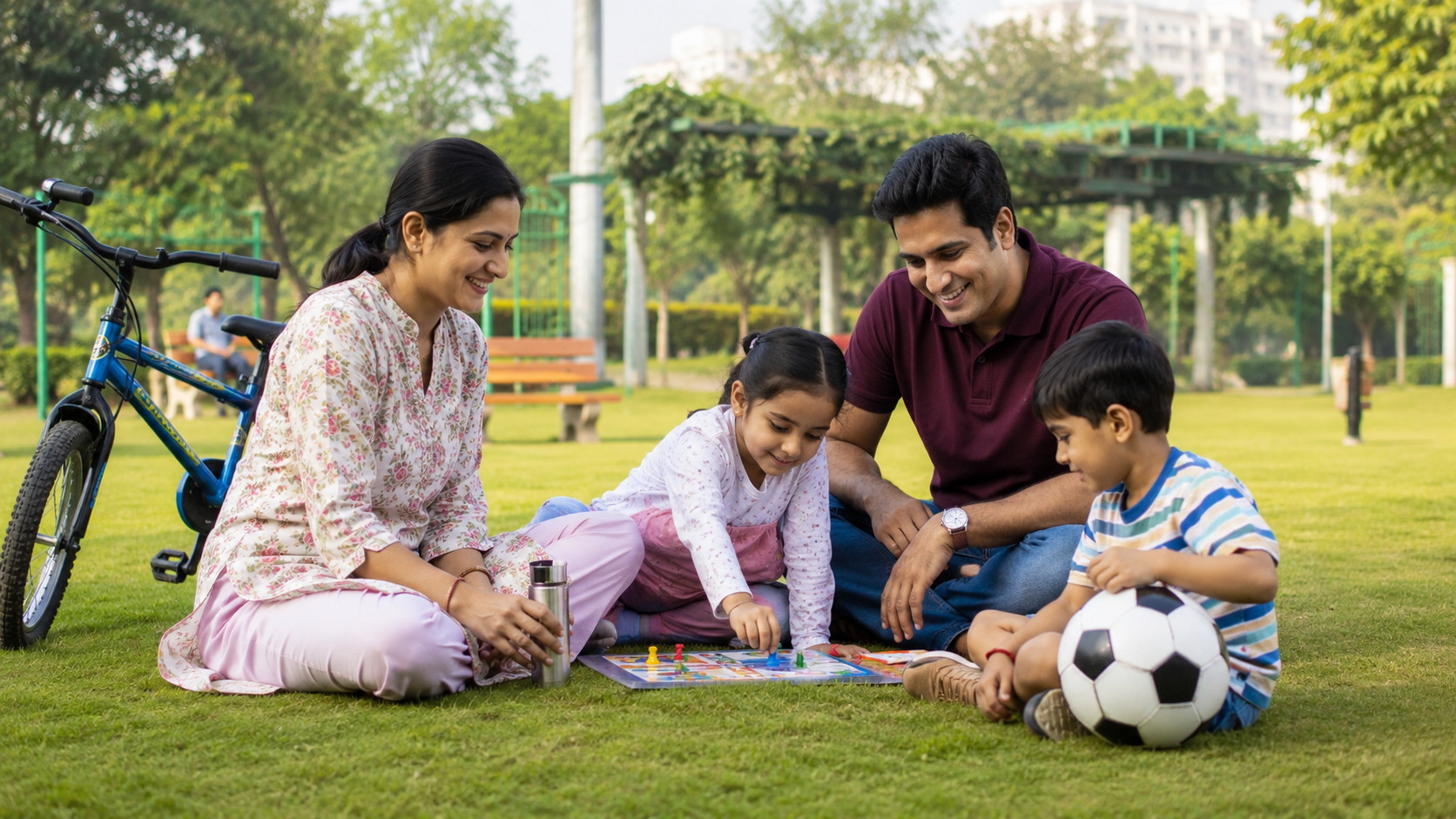
Traditional games like Ludo, carrom, or hide-and-seek Teaches turn-taking, handling winning and losing, strategy, and how to stay in a game when things are not going your way. Also just very fun.
-
Drawing, painting, and craft with no particular goal Giving children materials and time without telling them what to make produces some of the most engaged, focused, and satisfied small people you will ever see.
-
Water play and nature exploration Sensory experience is particularly valuable for children under 5. Mud, sand, water, leaves, stones. None of it costs anything and all of it is developmentally rich.
Learning Without Pressure
One of the things parents who genuinely love their children sometimes accidentally do is try too hard. Every activity becomes a lesson. Every game has a goal. Every outing has something to teach. Children pick up on this and it changes the quality of the experience for them.
The summer that children remember, and the one that actually develops them most fully, is the one where they were allowed to just be. To be bored occasionally and find their own way out of it. To make decisions about how to spend an afternoon. To fail at something small without it being a big moment. To succeed at something and be genuinely proud without being immediately redirected to the next challenge.
Freedom within a safe and warm environment is not laziness in parenting. It is one of the most sophisticated and effective things you can offer a young child. The confidence, creativity, and self-reliance that come from it are difficult to build any other way.
The Little Scholar Playschool Ghaziabad
At The Little Scholar Playschool in Kavi Nagar, Ghaziabad, the philosophy that runs through the school year is exactly the one this article describes. Children learn best when they feel safe, when learning happens through doing rather than being told, and when the adults around them are genuinely engaged rather than just managing.
The school brings the same approach to its summer programmes as it does to its regular curriculum. Activities are hands-on and varied. The environment is warm and consistent. And children are treated as individuals whose pace and personality matter, not as a group to be moved through a schedule.
If you are in Ghaziabad and looking for the best playschool in Kavi Nagar Ghaziabad for the coming year, or simply want to know more about how The Little Scholar approaches early childhood education, the team is easy to reach. You can also read what parents across Ghaziabad have to say on their Google Business profile.
Interested in The Little Scholar?
Whether you are looking for playschool admissions or want to know more about summer programmes at The Little Scholar, Kavi Nagar, Ghaziabad, the team is happy to help. Fill the inquiry form or call directly.
Frequently Asked Questions
How can I reduce screen time for my child during summer vacation?
The most effective approach is gradual replacement rather than sudden restriction. Swap one screen activity at a time with something hands-on and engaging like drawing, outdoor play, cooking together, or a traditional game. Involving children in the choice of activity makes them far more willing to participate. Children rarely miss screens when something genuinely interesting is in front of them.
Are family visits and extended family time important for young children?
Yes, very much so. Time with grandparents and extended family gives children a sense of belonging and emotional security that peer relationships alone cannot provide. Children learn how to adjust with different personalities, how to listen to older people, and how families function as a unit. These experiences shape social intelligence in lasting ways.
What is a good daily routine for children during summer vacation?
A flexible rhythm works far better than a strict timetable. Start mornings with outdoor play or physical activity, move to creative work like drawing or building in mid-morning, allow for quiet time or a short rest after lunch, and keep evenings for family interaction and conversation. The goal is predictability without pressure, not a schedule that creates stress if something shifts.
Do short family trips help children learn?
Yes. Even short trips, whether to a nearby nature spot, a market, a temple, or a relative’s home, expose children to new environments, new people, and new conversations. This kind of observation-based experience builds curiosity, language skills, and social confidence in ways that are difficult to replicate at home. The journey itself is often as valuable as the destination.
Can traditional activities replace structured learning for young children?
For children between the ages of 2 and 7, traditional activities are not just a substitute for structured learning, they are often more effective. Storytelling builds imagination and language. Traditional games develop patience, strategy, and social skills. Helping around the house teaches responsibility. These experiences create holistic development that formal instruction at this age rarely matches.
Why is summer vacation especially important for children aged 2 to 7?
The years between 2 and 7 are the most formative period of brain development. Neural connections form rapidly, habits take root, and emotional patterns are established. Summer vacations during these years are not just a rest, they are an opportunity to shape curiosity, resilience, and emotional intelligence through real-life family experience. The quality of these summers tends to show up in how children approach school, friendships, and challenges for years afterward.
What a Good Summer Actually Gives Your Child
The summers that children carry with them into adulthood are rarely the ones that were perfectly planned. They are the ones where they felt genuinely part of something, where they had space to be a child, and where the people around them were present enough to notice them.
That does not require a lot of money or an elaborate itinerary. It requires some thought, some time, and a willingness to resist the convenience of just letting the screen handle the afternoon. Most parents in Ghaziabad already have everything they need to give their child a genuinely good summer. The best playschool in Kavi Nagar Ghaziabad will tell you the same thing: what shapes children most is not the programmes you enrol them in, but the ordinary moments you choose to be present for.