Parenting · Child Health · Best Play School in Ghaziabad
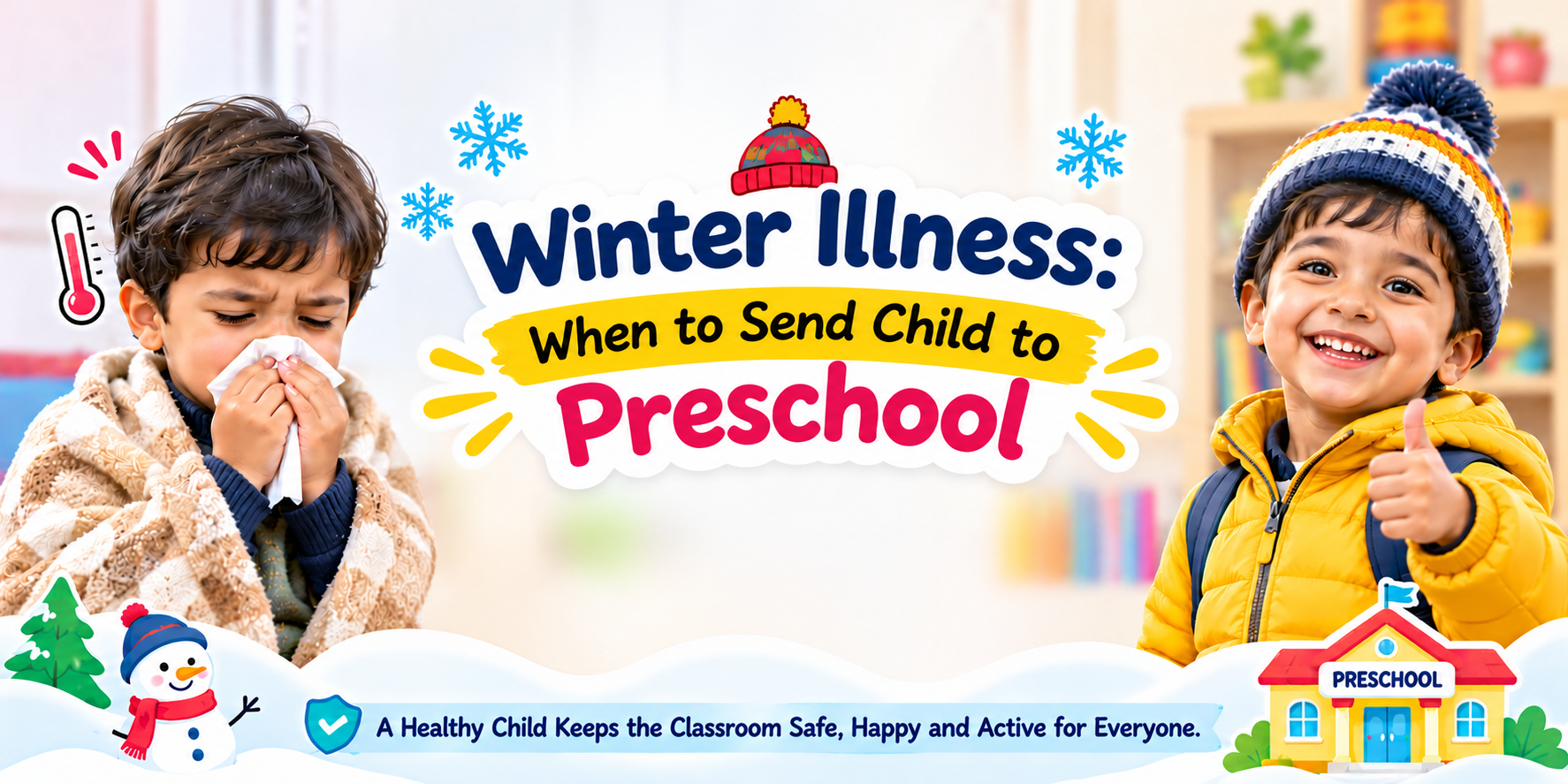
Winter Illnesses and Preschool: When to Send, When to Keep Home
Every Ghaziabad parent faces the same anxious morning question in winter. Runny nose. Slight cough. Should they go to school today, or is it one of those days? Here is a calm, clear, practical guide to deciding, built around the symptoms, the rules, and the Ghaziabad reality of a long cold-and-pollution season.
7:15 AM, a Ghaziabad winter morning
Your child wakes up with a slightly runny nose. The breakfast was fine. The energy seems normal. But they coughed twice while brushing. Last week there was a note from school about a bug going around. Your WhatsApp group is already full of mothers asking “bhejna hai ya nahi?” You check their forehead. It feels a little warm, or maybe you are imagining it. The school bus arrives in 20 minutes. You have to decide now.
Every parent of a preschooler knows this moment. It arrives dozens of times across the long Delhi-NCR winter, and the decision is rarely obvious. Send them, and you may be the parent who passed on an illness to twenty classmates. Keep them home, and you may have kept them away from a day of learning they would have handled perfectly well. There is no universal right answer, because every illness is different and every child is different. But there are reliable principles that help parents decide with far more confidence than the morning WhatsApp vote.
This blog walks you through the principles the best play schools in Ghaziabad quietly use. We will cover which symptoms clearly mean “stay home,” which symptoms are usually fine, how the 24-hour fever rule actually works, the common winter illnesses to recognise, the red flags that need urgent medical attention, and how to prevent half of these cases from spreading in the first place. For parents searching for the best play school in Ghaziabad that handles winter illness policies responsibly, this is also a quiet guide to what to ask about.
A good “keep home” decision is not about being overprotective. It is about being responsible to your own child, to twenty other families in the classroom, and to the teachers who will be with your child for the next five hours. The parents who get this right are not the ones who always keep sick children home. They are the ones who know how to tell the difference.
The 7:15 AM Dilemma Every Parent Knows
The reason this decision feels so hard is that most winter illnesses do not announce themselves clearly. A child with the flu is obviously staying home. A child who is completely well is obviously going. But most mornings, especially from October through February in Ghaziabad, children arrive at the breakfast table somewhere in between. A bit of a sniffle. A mild cough. Pale cheeks. Slightly less appetite. One sneeze, then nothing. Were they always this quiet in the morning?
Working parents feel the pressure particularly sharply. A sick day for the child often means a sick day for a parent too, which affects meetings, deadlines, and the family calendar. Grandparent-supported families have more flexibility, but still face the same core question. What matters is not the convenience of the answer. What matters is the honest reading of the child’s symptoms, measured against reasonably clear rules that take the guesswork out of the morning.
The Clear “Send” vs “Keep Home” Guide
Most winter mornings fall into one of these two categories, if you look at the symptoms honestly. The two cards below cover the vast majority of situations. If your child has a symptom in the left column, school is usually fine. If any symptom in the right column is present, your child needs to be home.
Usually Fine to Attend
- Mild runny or stuffy nose with clear mucus, no fever, child is active and eating normally
- Occasional dry cough that is not persistent, with no breathing difficulty
- A healed scrape or small cut that is clean and covered
- Recovering from a cold for 2+ days, with energy returning and no fever for 24 hours
- A rash the doctor has already seen and confirmed is not contagious
- Teething-related mild fussiness without actual fever
- Mild seasonal allergies that are being managed and not causing distress
Child Should Rest at Home
- Fever of 100.4°F (38°C) or higher within the last 24 hours, even if controlled by medication
- Persistent or productive cough that disrupts sleep, speech, or breathing
- Vomiting or diarrhoea within the last 24 hours, even if the child seems otherwise okay now
- Thick yellow or green mucus combined with cough, fatigue, or facial pain
- Unexplained rash that has not been evaluated by a doctor
- Red, oozing, or crusty eyes suggesting conjunctivitis (pink eye)
- Visible fatigue or listlessness that is unusual for your child
- Any symptom of a known contagious illness like flu, chickenpox, or hand-foot-and-mouth
- Difficulty breathing, wheezing, or chest pain — these need urgent medical attention, not school
These two cards cover the vast majority of winter mornings. A child who meets the left-column criteria will almost always have a fine day at school. A child who shows any right-column symptom belongs at home, resting, hydrating, and recovering, where they will get better faster and will not pass the illness on to a classroom of other children.
The 24-Hour Fever-Free Rule, Explained
If there is one single rule every parent should know about preschool and illness, it is this one. Most paediatricians and schools worldwide follow the same principle, and it exists for excellent reasons.
Your child needs 24 full hours fever-free, without the help of fever-reducing medication, before returning to school.
This means that if your child had a fever at 10 AM yesterday and it broke in the afternoon only because they took paracetamol, that does not count as fever-free. The 24-hour clock starts from the last temperature reading that was normal without any fever medication in their system. Only then is the child both genuinely well enough to attend and no longer actively infectious to their classmates.
The same principle applies to vomiting and diarrhoea. A child should typically be free of these for at least 24 hours before returning. This is not just about the individual child’s comfort. It is about not sending them back into a classroom where thirty other children will touch the same surfaces, share the same play materials, and take the same bugs home to their own families.
This rule can feel inconvenient. It often means an extra day off even when the child “seems fine” by evening. But it exists precisely because children can seem fine and still be contagious, and because an afternoon of apparent recovery is not the same as full recovery. Rushing a child back the moment the fever drops is one of the most common ways winter illnesses sweep through a preschool classroom.
Reading Your Child’s Temperature
Not every warm forehead means a fever, and not every fever is the same level of concern. Here is a straightforward guide to interpreting what the thermometer actually shows and what to do about it.
For infants and very young children, lower thresholds and different protocols apply. Always consult your paediatrician for your specific child’s history, and keep your doctor’s number handy during peak illness months. A good digital thermometer with a clear reading is one of the most useful tools a preschool parent can keep in the house.
The Winter Illnesses Every Ghaziabad Parent Will See
From October through February, these are the illnesses that cycle through preschool classrooms with predictable regularity. Recognising them helps parents respond appropriately rather than panicking at every runny nose, and knowing the typical “return to school” timeline for each helps avoid both over-cautious absences and premature returns.
The classic runny nose, mild cough, slight sore throat, and occasional sneezing. Caused by hundreds of different viruses, which is why children get them again and again. Most preschoolers catch 6-8 colds a year, more during winter. The illness is usually mild, lasts 7-10 days, and does not require antibiotics.
Much more serious than a cold. Comes on suddenly with high fever, body aches, exhaustion, headache, and sometimes vomiting. A child with flu looks and feels genuinely unwell, not just slightly off. Flu is highly contagious and can be dangerous for young children. Annual flu vaccination is strongly recommended by Indian paediatric associations.
Vomiting, diarrhoea, stomach cramps, sometimes with mild fever. Highly contagious, spreads rapidly through preschool groups, and can lead to dehydration quickly in small children. Watch for signs of dehydration: reduced wet nappies or urination, dry mouth, no tears when crying, unusual sleepiness.
Red, itchy, or sticky eyes, often with yellow or green discharge that crusts overnight. Highly contagious when caused by bacteria or viruses, especially among preschoolers who constantly touch their faces and share toys. Needs doctor’s evaluation to determine the cause and appropriate treatment.
A common childhood viral illness causing fever, sore throat, and small red blisters on the palms, soles of feet, and inside the mouth. Highly contagious, especially in the first few days. Children often refuse food because the mouth sores hurt. The illness is uncomfortable but usually not serious.
Persistent wet cough, sometimes with wheezing or difficulty breathing, often following a cold that did not fully clear. More common in Ghaziabad winter due to combined cold and air pollution exposure. Needs medical evaluation, as some cases require inhalers, antibiotics, or other specific treatment.
An itchy, blistering rash that spreads across the body, usually with mild fever and tiredness. Highly contagious before and during the rash phase. Most Indian children today are vaccinated against chickenpox, which has dramatically reduced its spread, but outbreaks still occur in unvaccinated groups.
Red Flags That Need a Doctor, Not School
Some symptoms are not a “stay home from school and rest” situation. They are a “call the paediatrician today” or even “go to the emergency room now” situation. Recognising these can genuinely matter in a young child’s health.
Signs That Need Medical Attention, Not Just Rest
- Fever above 102°F that does not come down with medication, or any fever lasting more than 48-72 hours
- Difficulty breathing, visible chest-pulling, rapid breathing, or audible wheezing
- Severe lethargy, child who is unusually sleepy, not responsive, or difficult to wake
- Signs of dehydration: no urination for 6-8 hours, dry mouth, sunken eyes, no tears when crying
- Persistent vomiting that prevents keeping fluids down
- Severe or worsening headache, particularly with fever
- A rash that spreads rapidly, looks like bruises, or does not fade when gently pressed
- A seizure, loss of consciousness, or sudden confusion
- Severe stomach pain that does not ease, or pain with persistent vomiting
When any of these appear, do not wait for school hours or make judgement calls about preschool attendance. Call your paediatrician or seek urgent care. The question is not “school or home?” The question is “home or hospital?”
Returning to School: The Checklist
After a few days at home, the question flips. When is your child actually ready to go back? Use this simple checklist. Your child is genuinely ready to return when all of these are true, not when “most” of them are.
-
✓
At least 24 hours fever-free without the help of any fever-reducing medication.
-
✓
No vomiting or diarrhoea for at least 24 hours, and keeping food and fluids down normally.
-
✓
Eating and drinking roughly normally, not refusing all meals or significantly below their usual intake.
-
✓
Energy level is close to normal. They are playing, walking, and interacting rather than lying listless on the sofa.
-
✓
Any prescribed medication course (like antibiotics) has been started and given for the number of days the doctor recommended before returning.
-
✓
No contagious skin conditions are actively visible, or they have been cleared by a doctor for school.
-
✓
They can comfortably manage a full school day, including meals, outdoor time, and group activities.
-
✓
You have informed the school about the illness so teachers can watch for symptoms returning and support your child as they settle back in.
One quiet rule: if you are honestly unsure whether your child is ready, they probably are not. Keeping them home one more day is almost always safer than sending them back prematurely and watching the illness return within 48 hours, often worse the second time around.
Preventing Half of This in the First Place
You will never prevent every illness. Preschoolers get sick. That is part of how their developing immune systems learn to handle the world. But a huge proportion of winter illnesses can be prevented or significantly reduced through consistent small habits at home and reasonable practices at school.
Winter illness prevention habits that genuinely work
None of these are magic. All of them together, practised consistently through the whole family and reinforced by the school, make a real measurable difference to how often your child gets sick across the winter season. Handwashing in particular is one of the single most effective things any family can do.
The Ghaziabad Winter Reality: Pollution and Illness Combined
Ghaziabad winter is different from winter elsewhere
From late October through February, Ghaziabad experiences a difficult combination of falling temperatures and sharply rising air pollution. The AQI often enters the “very poor” or “severe” range for weeks at a time. This matters for preschool-age children in a specific way. Poor air quality irritates small airways, worsens existing coughs and colds, triggers wheezing in children who have never wheezed before, and makes any winter illness slower to recover from.
For a Ghaziabad preschooler, a cough that would clear in 3 days in a cleaner city may linger for 10 days here. A mild cold can turn into a lower respiratory infection faster. Children with any history of asthma or breathing issues are particularly affected. This does not mean children should stop attending preschool through winter, but it does mean parents should take winter illnesses here slightly more seriously than their relatives in other cities might suggest.
Practical steps for Ghaziabad families: check the AQI each morning, limit outdoor play on severe-pollution days, keep windows closed when AQI spikes, consider an air purifier for the child’s bedroom, and ask the preschool how they manage outdoor activities on bad-AQI days. The combination of good preschool practices and good home practices is what protects the child’s lungs through the toughest months.
Common Winter Illness Myths, Honestly Answered
Indian households carry decades of winter wisdom, some of which is genuinely helpful and some of which simply is not supported by medical evidence. Here are a few of the most common beliefs, honestly addressed.
How The Little Scholar Handles Winter Illness Responsibly
At The Little Scholar Playschool in Kavi Nagar, Ghaziabad, winter illness is treated as something to prevent, to recognise early, and to handle with calm transparent communication rather than panic. The school’s approach follows the same principles any good paediatrician would recommend, applied consistently across every classroom.
Handwashing routines are built into the daily rhythm, before meals, after outdoor time, and after visibly needed moments. Teachers are trained to recognise early signs of illness in children and to communicate promptly with parents if a child’s energy or temperature changes during the day. Shared water bottles and food are never permitted. The school maintains clean, well-ventilated indoor spaces, and adjusts outdoor play on severe-pollution days to protect young lungs. Clearly unwell children are sent home for the safety of the whole classroom, not kept through the day in the hope that symptoms will pass.
The school also communicates openly with parents during peak illness months. If an illness is actively circulating in a classroom, families are informed so they can watch for symptoms at home. If your child needs to be away for recovery, the school welcomes them back after a sensible fever-free period and prescribed medication course, without penalising rest. The partnership between home and school is what keeps winter manageable for everyone.
Parents searching for the best play school in Ghaziabad that handles winter illness, pollution, and preventive hygiene responsibly often mention this calm, transparent approach as one of the reasons they chose The Little Scholar. Read what Ghaziabad families say on their Google Business profile.
Looking for a Preschool That Takes Child Health Seriously?
If you want a preschool where hygiene, winter illness policies, and air quality decisions are handled thoughtfully and transparently, the team at The Little Scholar Playschool Kavi Nagar would love to welcome your family. Book a school visit or fill the admission inquiry form.
Frequently Asked Questions
Should I send my preschooler to school with a runny nose?
Yes, usually, provided the mucus is clear, there is no fever, the child has normal energy, and they are eating and drinking normally. A mild runny nose is one of the most common everyday symptoms of early childhood and is not usually a reason to miss school. However, if the runny nose comes with fever, lethargy, or thick coloured mucus, keep the child home and consult your doctor.
What temperature counts as a fever in a preschooler?
A temperature of 100.4°F (38°C) or higher is generally considered a fever in children. A temperature between 99°F and 100.3°F is slightly elevated but not usually a true fever. Any fever of 100.4°F or above means the child should stay home from school and rest, and should remain home until they have been fever-free for 24 hours without the help of any fever-reducing medication.
How long should a child stay home after vomiting or diarrhoea?
At least 24 hours after the last episode, and only when the child is eating and drinking normally again. Stomach bugs spread rapidly through preschool classrooms, so returning too early affects not just your child’s own recovery but potentially dozens of other families. Watch for dehydration signs during the illness and contact your paediatrician if the child cannot keep fluids down.
Can my child go to school on cough medicine?
If the cough is mild, occasional, dry, does not disrupt speech or breathing, and there is no fever or other symptoms, usually yes. If the cough is persistent, productive, disruptive, or accompanied by other symptoms like fever or fatigue, keep the child home. The question is not whether medicine is masking the symptom. The question is whether the child is well enough to participate in a full school day and is not actively infectious.
What should I do when my child catches cold after cold through winter?
Repeated colds are completely normal for preschool-age children, who typically catch 6-8 colds in a year as their immune systems develop exposure to common viruses. Focus on prevention basics: consistent handwashing, good sleep, nutritious meals, annual flu vaccination, and keeping other sick children away. If your child seems to be sick far more than usual, or illnesses are consistently severe or long-lasting, discuss this with your paediatrician.
Does cold weather itself make children sick?
No. Viruses make children sick, and winter does not cause more viruses. What winter does is bring people indoors together, often in less-ventilated spaces, where viruses spread more easily between people. Dressing warmly protects comfort but does not prevent colds directly. Good handwashing, ventilation, and avoiding close contact with clearly sick people do prevent them.
How does Ghaziabad’s air pollution affect winter illnesses in children?
Significantly. Poor air quality in Delhi-NCR winter irritates small airways, worsens coughs and colds, and makes recovery from any respiratory illness slower. A cold that would resolve in 3 days elsewhere may linger for 7-10 days here. Children with asthma or breathing sensitivity are particularly affected. Check the AQI daily, limit outdoor activity on severe-pollution days, consider an air purifier in the child’s bedroom, and ask the preschool how they adjust activities during pollution spikes.
Should preschoolers get a flu vaccine every year?
Yes, annual flu vaccination is strongly recommended for children above 6 months of age by Indian paediatric associations. It significantly reduces the chance of flu, the severity of any case that does occur, and the spread of flu through classrooms and families. Discuss timing and specific vaccine options with your paediatrician, usually best given before the winter illness season begins.
What should I ask the preschool about its illness and health policies?
Ask how they decide to send a child home when symptoms appear, what their fever and illness return policies are, how they communicate about contagious illnesses circulating in the classroom, how they handle severe-pollution days in Ghaziabad winter, what their handwashing and hygiene practices look like, and whether they require specific vaccination records. A good preschool will answer all these clearly and consistently.
What makes The Little Scholar the best play school in Kavi Nagar Ghaziabad for handling winter illness?
The Little Scholar Playschool in Kavi Nagar, Ghaziabad takes winter illness, pollution exposure, and preventive hygiene seriously. Handwashing routines are built into every day. Teachers are trained to spot early symptoms. Shared bottles and food are not allowed. Outdoor activities are adjusted on severe-pollution days. Clear communication with parents helps families manage illness together with the school rather than in isolation. Read parent reviews on their Google Business profile.
This article provides general parenting information for common winter illness decisions and is not a substitute for individual medical advice. For specific concerns about your child’s health, symptoms, or any decision about school attendance during illness, please consult a qualified paediatrician. In any medical emergency, seek urgent care immediately.
A Calmer Winter for Everyone
Winter in Ghaziabad will keep bringing colds, coughs, pollution-worsened symptoms, and the occasional stomach bug that sweeps through the classroom. That is simply what the season is. What you can control is how calmly you respond to each morning’s symptoms, how clearly you apply the same simple rules every time, and how honestly you distinguish between “mild and fine for school” and “needs a day of rest at home.”
The parent who keeps a sick child home for 24 hours after a fever is doing something quietly generous for every other family in the classroom. The parent who sends a well child in with a minor sniffle is doing something quietly sensible for their own child’s learning. The parent who knows the difference is doing something quietly excellent for the whole preschool community. That knowledge is not instinct. It is a learnable set of principles, applied consistently, through one winter after another.
When in doubt, keep them home. When clearly well, send them in. The 24-hour fever-free rule covers most of what sits in between.