
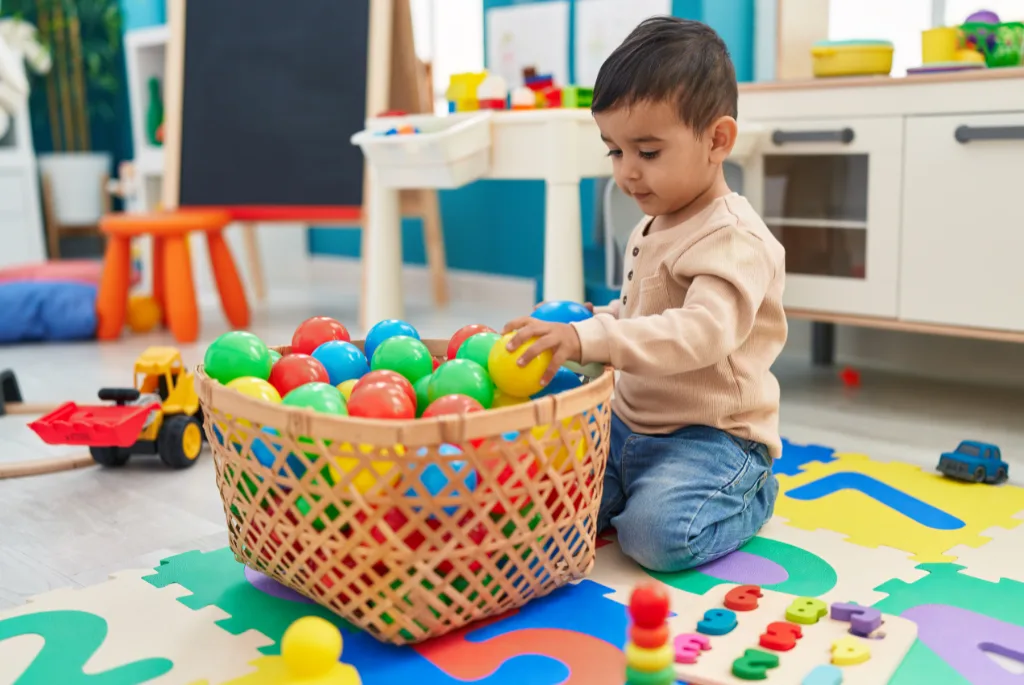
Most parents remember their child’s first day at a play school in Ghaziabad with surprising clarity: the hurried breakfast, the mismatched socks, the tiny hand wrapped around theirs as if deciding whether to trust this new adventure. The funny thing is, children rarely remember that morning. But they do remember what comes after: the teacher who kneels to greet them, the room that smells of crayons and storybooks, the first friend they make without anyone’s help.
That’s the real beginning, not the admission form, not the uniform, but the moment a child realises the world is bigger than home, and that they have a place in it.
Schools like Little Scholar Ghaziabad aren’t just offering early education; they’re guiding families through this quiet shift from dependence to curiosity.
How young children understand their expanding world
Spend 15 minutes at a lively play school in Ghaziabad, and you’ll see a version of learning adults forget existed. Children aren’t waiting for instructions; they’re constantly investigating. They tilt their heads at unfamiliar sounds, poke at objects, follow other children around, and test the limits of patience and gravity.
Early childhood experts often call this stage “the age of small experiments,” but the truth is more straightforward: children are building their own map of the world. And every texture, colour, voice and gesture becomes a tiny landmark on that map.
A good play school in Ghaziabad understands this and builds learning around the child’s natural pace, not the adult’s expectations.
Play is their language, not a break from learning.
Adults separate life into categories: learning, playing, and resting. Children don’t. Children learn from everything they play with. A spoon becomes a steering wheel, a bucket becomes a hat, a wooden block becomes a phone. These aren’t just games; they’re early exercises in imagination and logic.
That’s why the atmosphere in a thoughtful play school in Ghaziabad feels less like a classroom and more like a studio:
- Small conversations at every table
- Curious hands reaching for familiar toys
- Children negotiating rules of pretend games
- Teachers stepping in only when needed
Little Scholar Ghaziabad uses this natural rhythm to help children build confidence, vocabulary, social awareness and emotional balance, all without heavy instruction.
The difference between a school that “looks good” and one that actually helps a child grow
There’s something subtle about walking into a top-rated play school in Ghaziabad. It’s not about bright walls or fancy equipment. It’s about the energy in the room. Good schools feel unhurried. Children move freely without chaos. Teachers observe without hovering. Conversations sound genuine rather than rehearsed.
You see small things that matter:
- A shy child being gently encouraged, never pushed
- A loud child being guided toward calmer activities
- Materials placed where children can reach them independently
- Enough open space for children who, frankly, never stop moving
These signals tell you the school respects childhood, not as something to rush through, but as something worth understanding.
Teachers who understand children better than children understand themselves
A toddler’s day is full of emotions they cannot name. One moment they’re bold, the next moment they hide behind a chair. Teachers in strong early-years programs read these shifts like chapters in a story.
In a nurturing play school in Ghaziabad, teachers:
- Wait patiently for a child to settle
- Explain emotions instead of dismissing them
- Offer help without taking control
- Celebrate little progress as real achievements
This is what makes a top-rated play school in Ghaziabad special, not a list of facilities, but adults who understand how to guide a child’s inner world.
Why early education looks different today
Children aren’t growing up in the world we grew up in
Screens, fast-paced visuals, multiple languages at home, busy schedules, today’s children experience a world that’s constantly shifting. A modern play school in Ghaziabad can’t rely on past methods.
So the shift has begun:
- From memorisation to exploration
- From silent classrooms to expressive ones
- From rigid routines to flexible rhythms
- From teacher-led learning to child-led discovery
Little Scholar Ghaziabad blends these ideas with traditions that have always worked: stories, music, outdoor play and honest human connection.
Social learning becomes the real foundation
Long before a child writes their first letter, they’re learning something far more critical: how to exist alongside other people their size.
A good play school in Ghaziabad becomes the training ground for:
- Sharing space
- Waiting for a turn
- Settling disagreements
- Recognising feelings
- Building friendships
These skills don’t come from textbooks, but they influence how smoothly a child enters formal schooling and how confidently they face the world.
Choosing the right place for your child’s beginning
It’s not about the fanciest building, it’s about the right fit
Parents want the top-rated play school in Ghaziabad, but “top-rated” should mean more than popularity. The real question is: Does the school understand who your child is?
Look for:
- An atmosphere that feels warm, not overwhelming
- Teachers who speak softly, not hurriedly
- Children who look engaged, not overstimulated
- Activities that stretch imagination, not just skills
- A balance between routine and freedom
A good play school in Ghaziabad doesn’t prepare children to impress others. It prepares them to understand themselves.
The transformation you notice slowly, then all at once
By the end of the year, the change surprises many parents. Children walk in confidently, wave goodbye without hesitation, speak more clearly, express needs without frustration, and attempt tasks with genuine pride.
These aren’t academic achievements; they’re life skills. And they’re the result of well-paced early education. Schools like Little Scholar Ghaziabad specialise in this transformation: giving children the courage to explore the world without fear.
FAQs
Most children do well when they start between 2 and 3 years old. They’re curious, observant and beginning to enjoy short routines. A caring play school in Ghaziabad helps them settle at their own pace.
If your child shows interest in exploring beyond home, enjoys simple group play and adapts to new faces, play school can be a healthy next step. Many families choose a play school in Ghaziabad at this age because the environment is gently structured.
Yes. Most children at 2.5 can communicate needs, follow short instructions and participate in group activities. A supportive nursery or play school in Ghaziabad ensures a smooth, confidence-building transition.